






BASIS OF TRAINING
Training in Action
As people use the Kenja training to recover their natural abilities and interests and to expand their communication skills, a natural curiosity is reignited. They begin to look for ways to consolidate the positive change they’ve gained through Energy Conversion meditation.
Responding to this demand, a large (and growing) list of Kenja-based activities has emerged. In a supportive, non-judgemental environment where participation at all levels is encouraged - from complete beginners to advanced and even elite level - people not only find the joy of physical and cultural pursuits, they actually improve very quickly!
We are privileged to have enlisted the expertise of consistently high quality, professional instructors and coaches - who themselves have retained a natural joy for their area - to take many of the classes and trainings.
Activities on offer include netball, hockey, fencing, soccer, touch football, basketball, Australian rules, tennis, gymnastics, athletics, sailing, aerobics, kayaking, ballroom dancing, showcase, tap dancing, ballet, music, poetry, speech and human business skills (such as leadership training by working with agreement rather than control) - and much more!
Contact your nearest Kenja centre for more information on the training and associated huge list of activities taking place each week.
360 DEGREES - KENJA NATIONAL EXECUTIVE
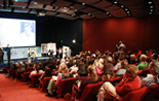
Kenja is a constantly evolving and developing communication training ground. Today we operate centres across Australia and alongside regular Energy Conversion workshops, Communication and Klowning classes, a number of national Kenja events bring together many people from all centres, and all walks of life each year.
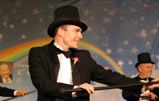
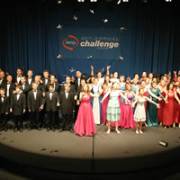
Each year, the Canberra Kenja centre hosts the Kenja Challenge – a 3-day programme featuring sporting competitions, and a Kenja Show. Around September, Kenja Melbourne puts on a Kenja Eisteddfod – four days of cultural competition, performance and communication. And later in the year, the Kenja Spectacular lights up Sydney and at the end of summer, Sydney also hosts the sporting-focussed Kenja Aussie All Stars weekend. All these national events include lectures presented to consistently full house audiences.
Each event is great fun for all involved and include hundreds of people every year. But what is their purpose?
1. Kenja is like a gymnasium for communication. People use Energy Conversion and Klowning to become more effective communicators. A nationally co-ordinated event encourages participants to stretch themselves, to take on and achieve activities that expand their personal range. Organised on a purely voluntary basis, they rely wholly and solely on a person’s ability to make things happen by agreement. Those who choose to help organise each event get invaluable on-the-spot training through the support of event co-ordinators and fellow team members. They also benefit through finding out new and better ways to achieve things, and proudly showing results of their work to the world!
2. Annual Kenja events necessitate organisers and participants to work in groups. Now there’s a word that causes many to run and hide. It’s one thing to manage your own life, but to work in a group! Yet groups exist everywhere – at work, in families, in communities. We move in and out of them on a daily basis. Understanding the dynamics of a group action and being able to work with others is part of a healthy, effective and expansive life. If you want to achieve anything in life, at some point you are likely to have to interact with a group to make it happen. With a Kenja event, you can put your toe in the water and find out that groups really are only made up of a lot of individuals working towards a similar goal.
3. Each centre has its own unique personality, a composite of the many individuals who train there. National events bring the centres together - Canberra, Melbourne, Sydney - and the resulting interchange validates individual creativity and builds the national Kenja community.
